About
About This Project
Based on a systematic survey of 133 studies on automated issue resolution, this project builds a knowledge-centric view of how LLM-based agents acquire, represent, use, and update software knowledge during repository-level issue resolution. This website is the companion showcase page for the paper Knowledge-Centric Automated Issue Resolution: A Systematic Survey and Taxonomy, designed to support efficient literature exploration, quick access to the manuscript, and structured navigation across the survey's main findings.
Why This Paper Matters
01
A Knowledge-Centric Lens
Instead of organizing the field only by benchmarks, model families, or agent pipelines, the paper asks what knowledge issue-resolution systems actually depend on, where that knowledge comes from, and how it is transformed into actionable repair support.
02
A Three-Layer Taxonomy
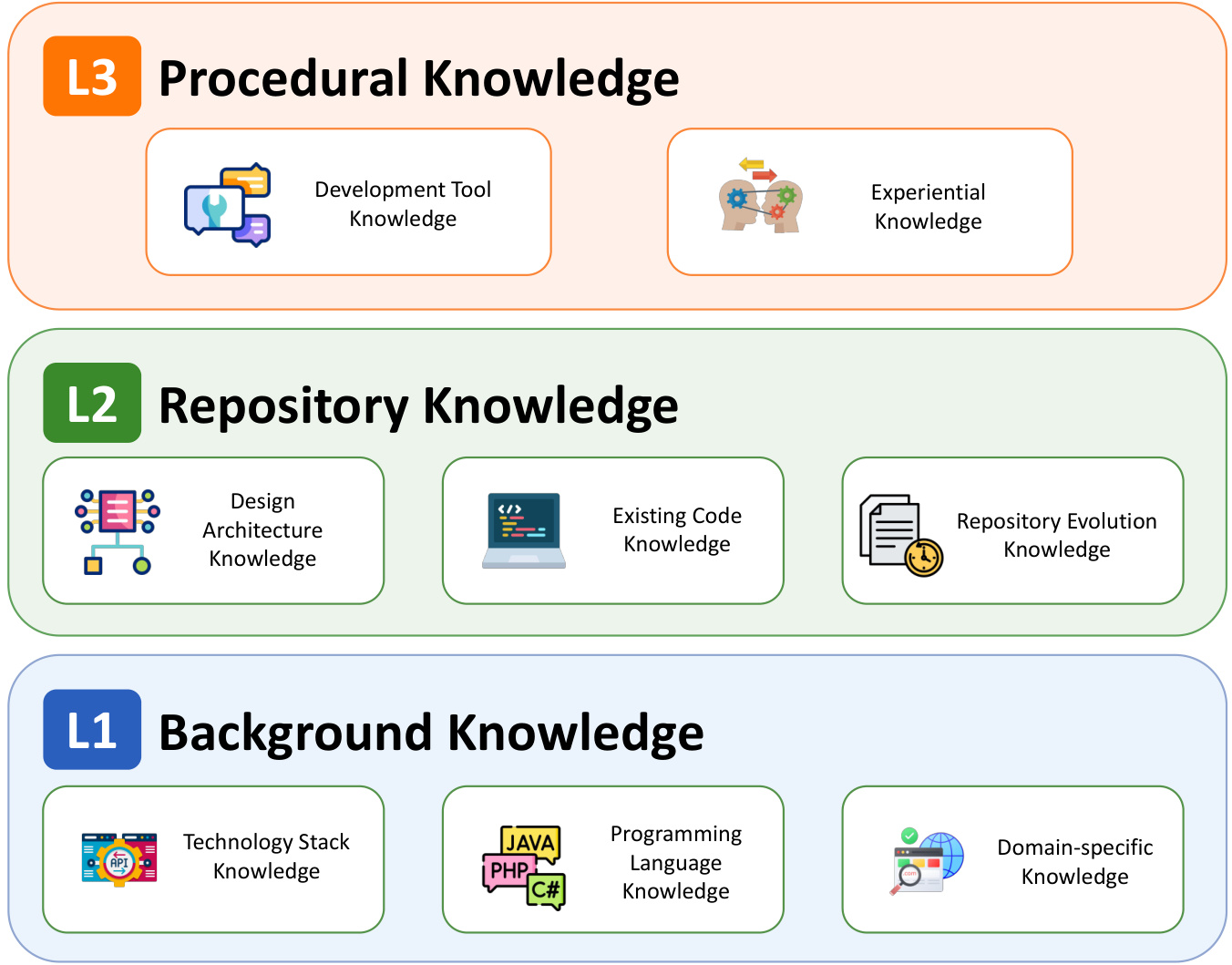
The survey separates the field into Background Knowledge, Repository Knowledge, and Procedural Knowledge, making it easier to compare graph-based, retrieval-based, tool-based, memory-based, and training-based systems within one common framework.
03
A Practical Research Map
The paper not only summarizes the current landscape, but also highlights the field's shift toward history-aware, feedback-aware, and experience-aware issue resolution, while exposing gaps in architecture reasoning and explicit background knowledge.
Core Contributions
Cognitive Framework
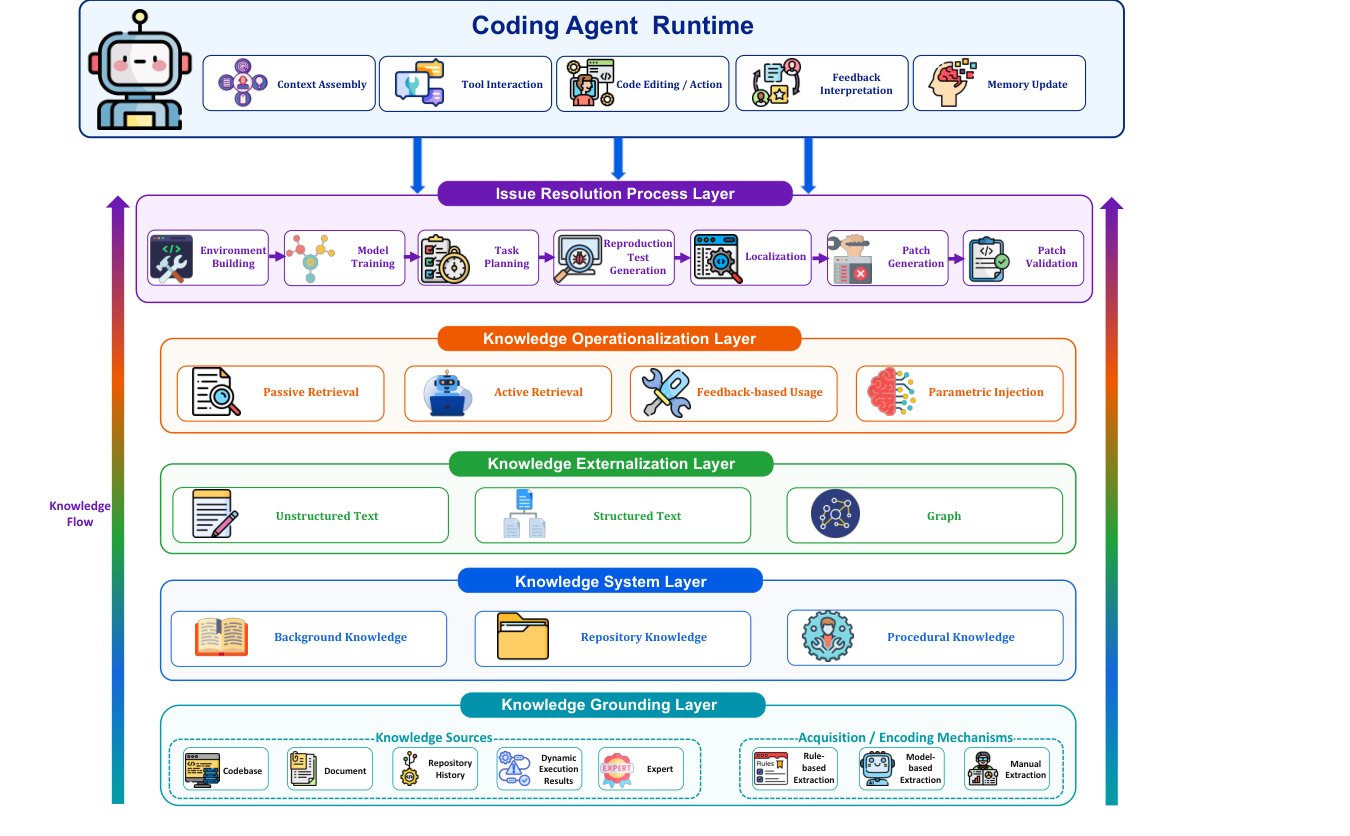
Contribution 1The paper proposes a knowledge-centric cognitive framework that links knowledge grounding, knowledge systems, externalization, operationalization, and issue-resolution workflow stages in one analytical structure.
Systematic Taxonomy
Contribution 2It introduces a structured taxonomy covering knowledge types, sources, extraction methods, representation formats, usage methods, and workflow stages, so heterogeneous issue-resolution systems can be compared consistently.
Trend Analysis
Contribution 3It identifies dominant knowledge usage patterns and emerging opportunities, showing that code- and tool-grounded systems dominate today, while history-aware and experience-aware methods are rising and architecture-aware reasoning remains limited.
Research Questions
RQ1
What types of knowledge are used in issue resolution?
RQ2
What are the sources and extraction methods of knowledge?
RQ3
How is knowledge represented for automated issue resolution?
RQ4
How is knowledge used by LLMs in issue resolution systems?
RQ5
At which stage is knowledge applied in issue resolution?
RQ6
What recent trends and dominant patterns characterize knowledge usage in automated issue resolution?
Core Figures
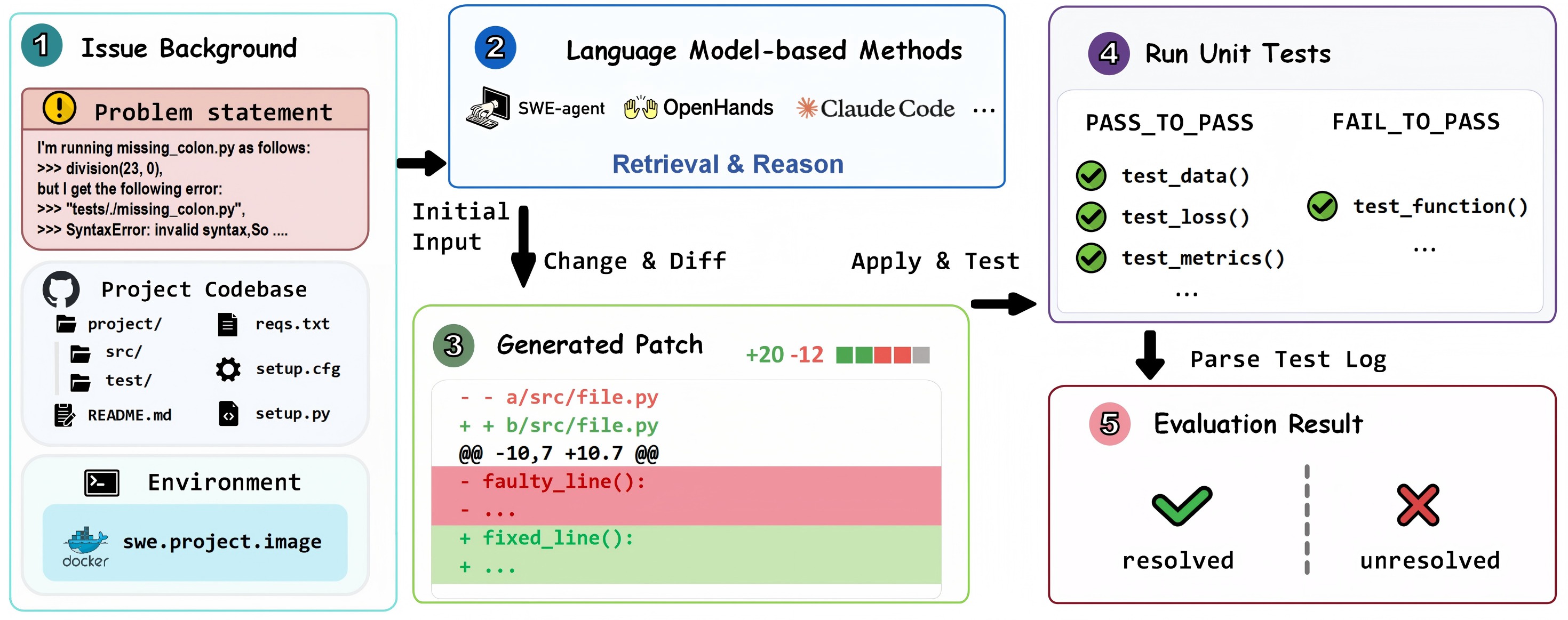
Automated Issue Resolution Workflow
This figure introduces the end-to-end issue-resolution process, from issue context and repository grounding to patch generation, testing, and final evaluation.
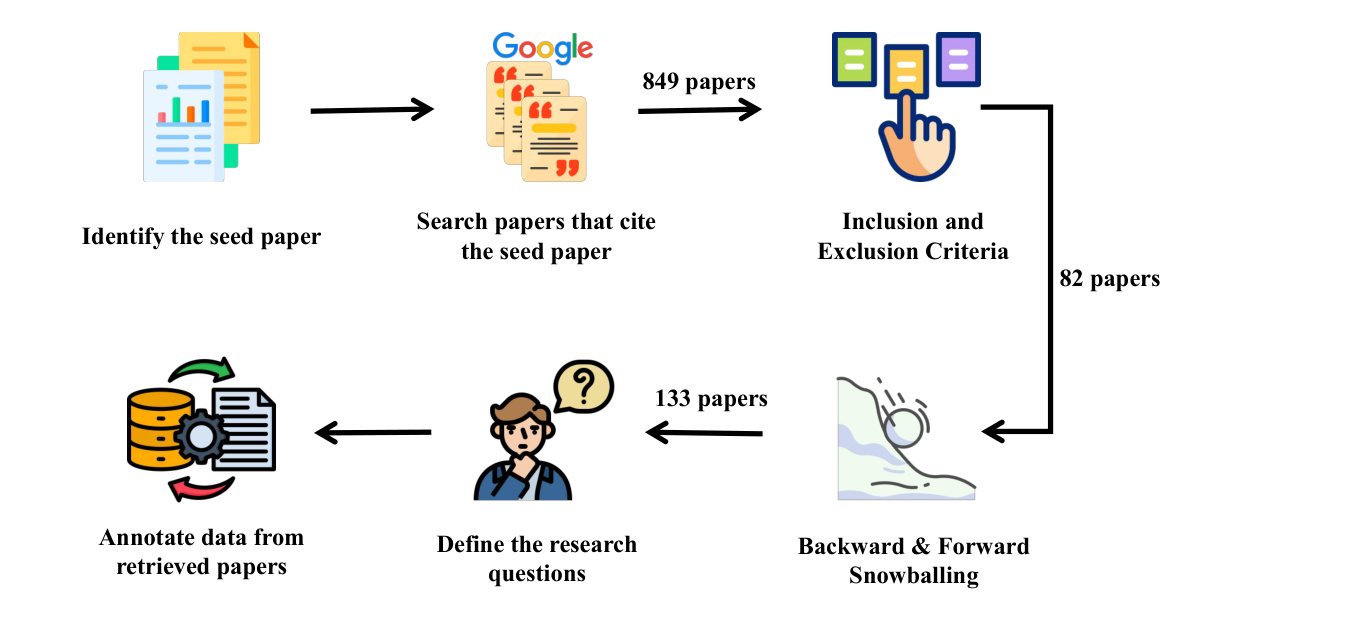
Survey Collection & Filtering Process
This figure shows how the reviewed corpus was constructed through citation search, screening, snowballing, and final annotation.
Knowledge-Centric Cognitive Framework
This is the conceptual center of the survey, connecting knowledge sources, representations, usage methods, and workflow stages inside a unified layered model.
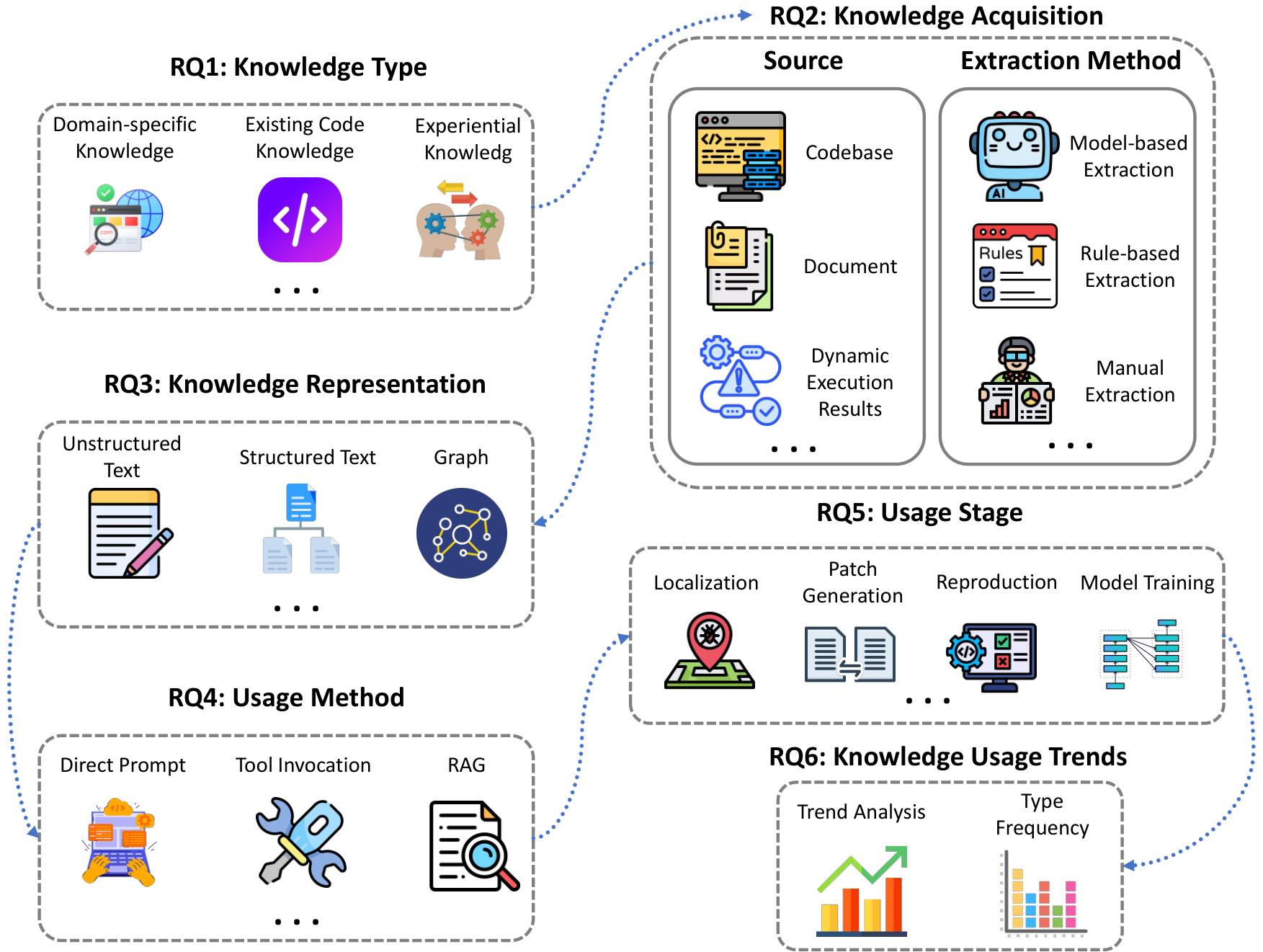
Research Questions Map
This figure explains how RQ1-RQ6 align with different dimensions of the framework, from knowledge definition to trend analysis.
Three-Layer Knowledge Taxonomy
This figure gives the quickest overview of the paper's main taxonomy: Background Knowledge, Repository Knowledge, and Procedural Knowledge.
What This Website Provides
- direct access to the latest manuscript PDF and citation information
- a structured public entry point to the survey's taxonomy and research questions
- searchable tables and resource views for the reviewed literature
- a companion site that turns the paper's static analysis into a browsable knowledge map
Project Workflow
- Collect and maintain survey-aligned paper metadata and coding records.
- Rebuild the SQLite database from the curated review data.
- Render MkDocs source pages from templates and generated statistics.
- Export the public static site for paper, tables, resources, and citation browsing.